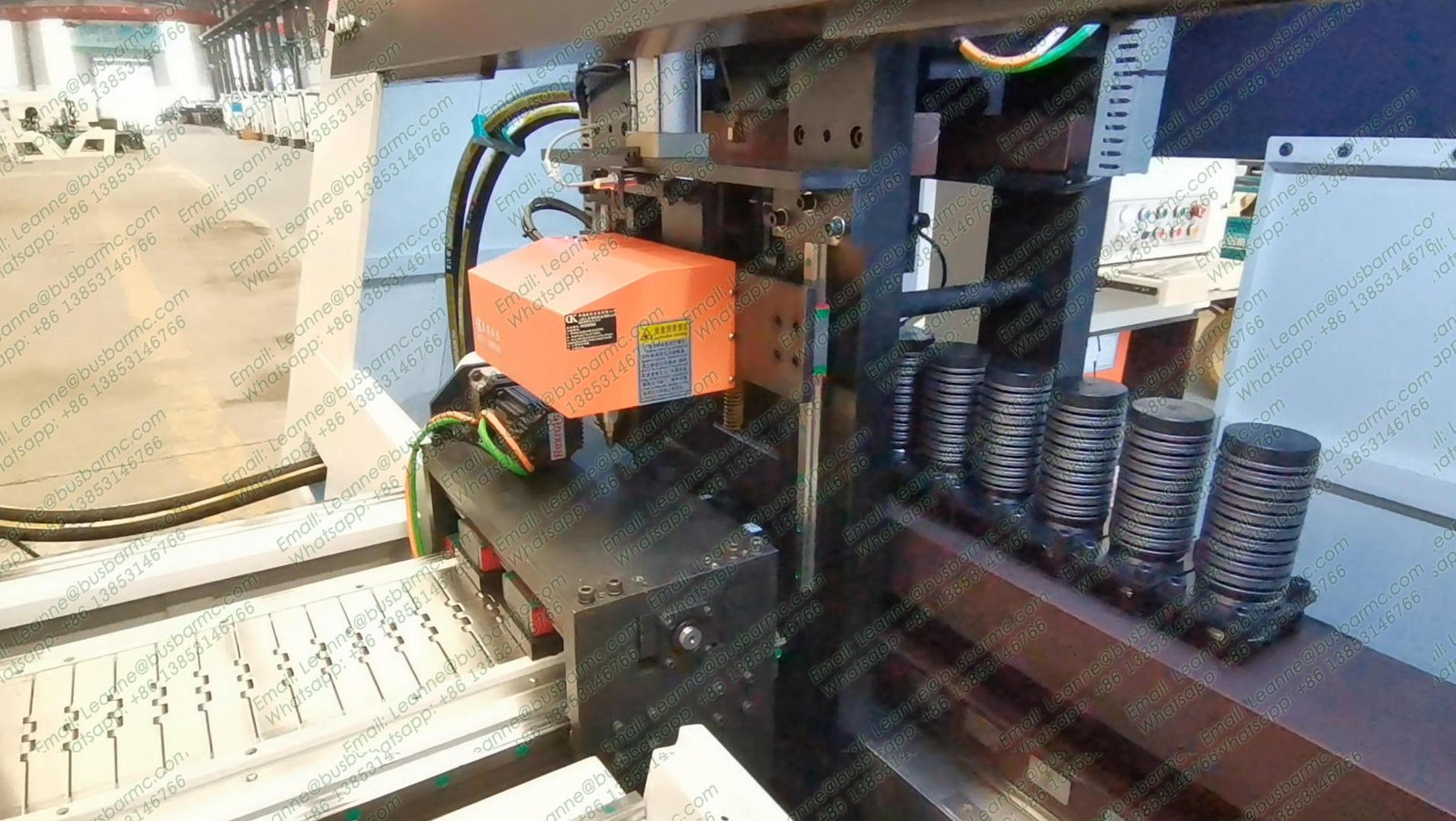
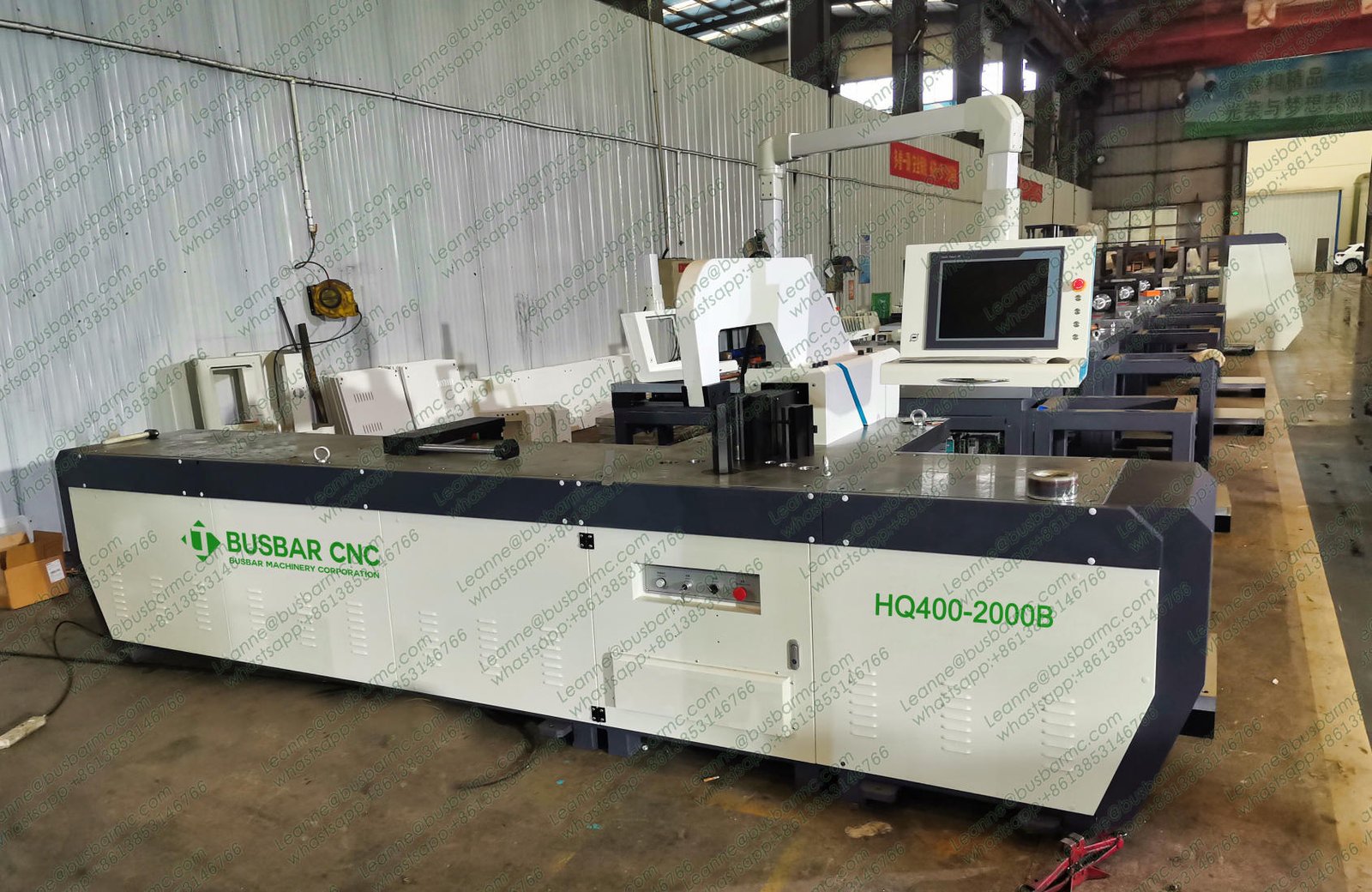
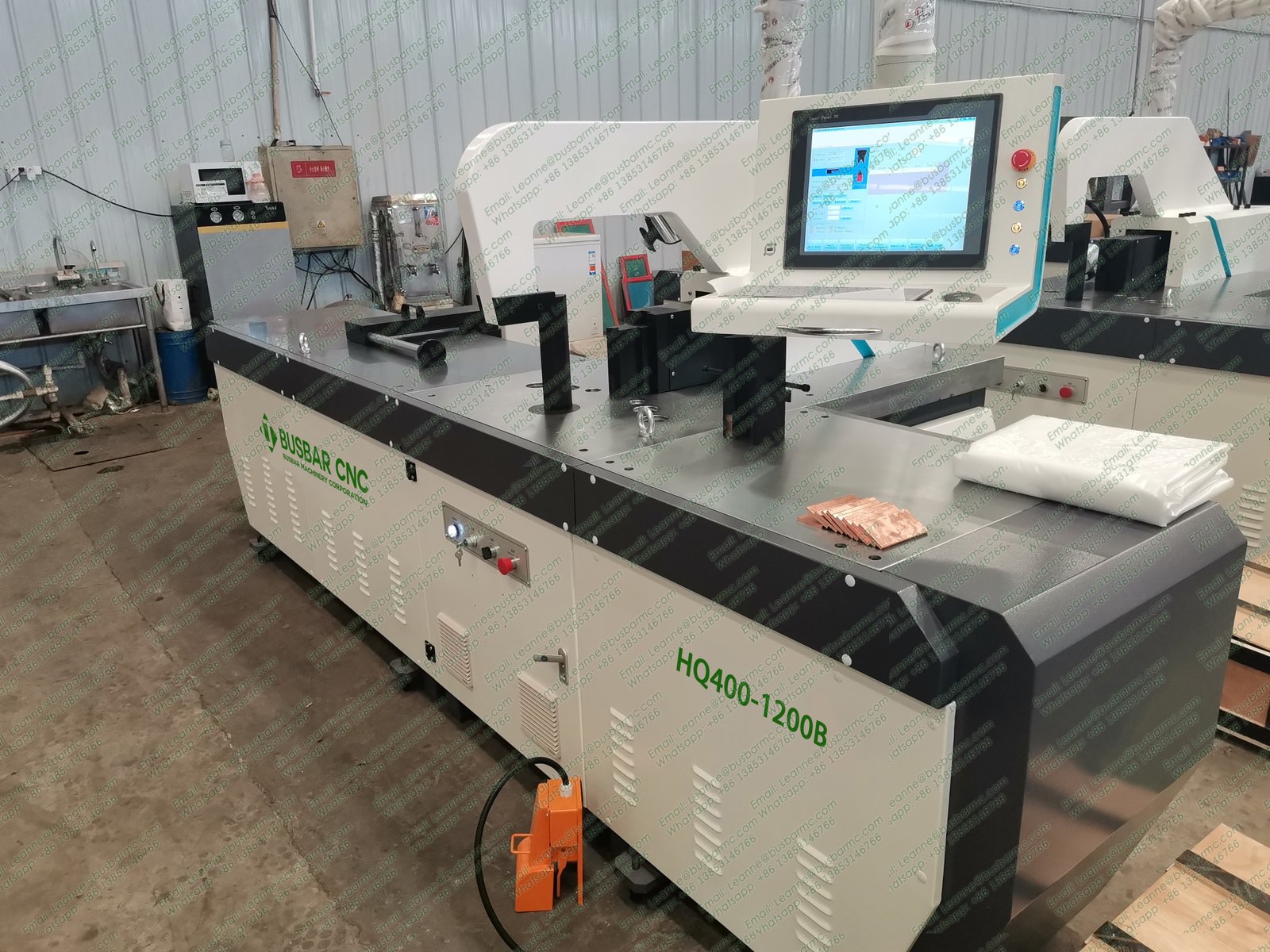
Whatsapp/Tel:+86 13853146766
 English
 Spanish
 Persian
 Hebrew
 Russian
 Portuguese
 French
 Vietnamese
 Thai


Three-station busbar machine tech guide for punch, cut and bend on busbarmc 303U-3-C / 503U-3-C / 803U-3-C with English figures and model cards.
Models: busbarmc 303U-3-C / 503U-3-C / 803U-3-C
Type: Three-station busbar machine (punching–cutting–bending)
Direct answer: A three-station busbar machine (also called a 3-in-1 busbar processing machine) integrates punching, cutting/shearing, and bending in one frame so copper or aluminum busbars for switchgear, transformers, and power distribution can be fabricated without transferring bars between three separate tools. On busbarmc models 303U-3-C, 503U-3-C, and 803U-3-C, three hydraulic units can run in parallel or in sequence. Size the machine by your largest width × thickness, hardest hole family, and hardest bend family—not by a generic “best machine” claim.
overview 3station en
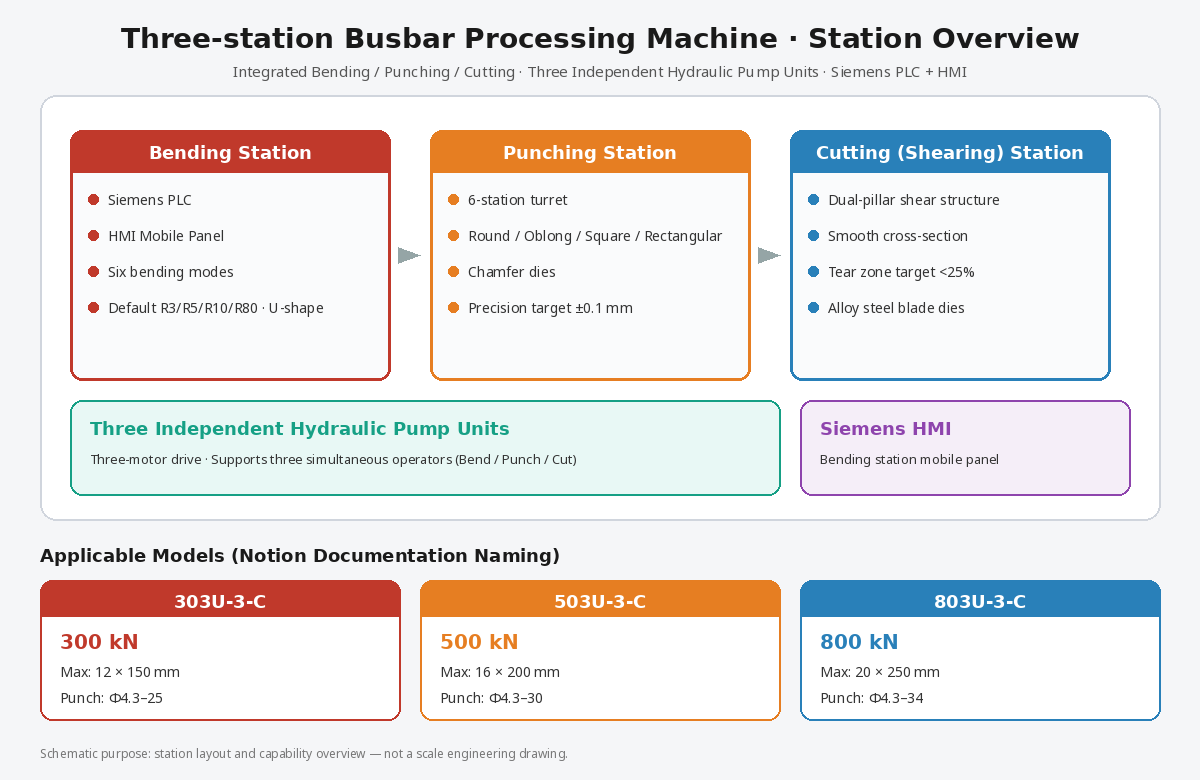
Caption: Three-station layout overview: bending, punching, cutting + three hydraulic pump units + Siemens HMI
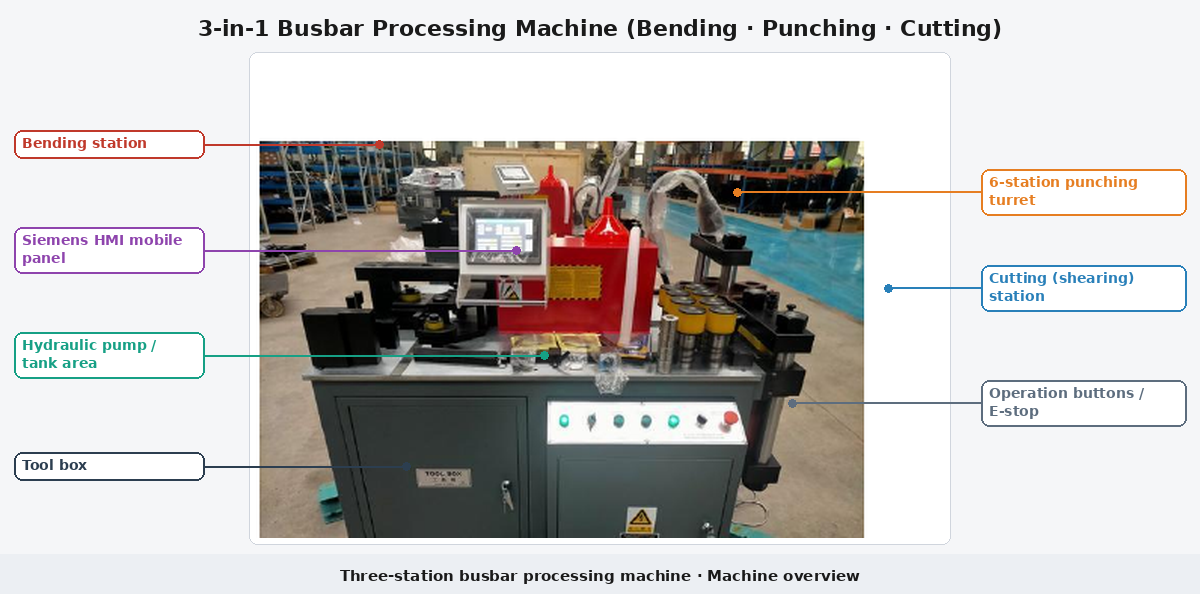
machine overview en
Caption: Machine overview with English callouts (stations, Siemens HMI, hydraulic area, controls)
This page is a three-station technical documentation package for panel builders, procurement / RFQ teams, and AI answer engines that need verifiable entities. It uses busbarmc model names 303U-3-C / 503U-3-C / 803U-3-C. Where public pages differ by region, treat the order acknowledgment + FAT samples as the source of truth.
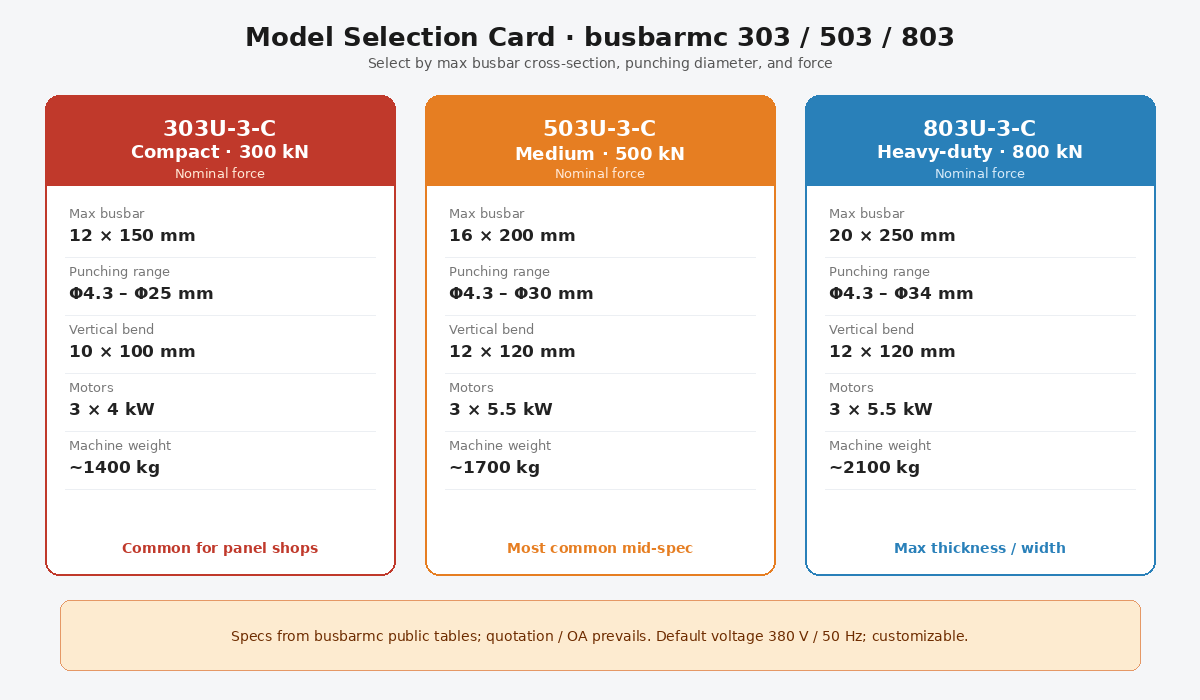
Choose 303U-3-C / 503U-3-C / 803U-3-C by capacity class, then confirm dies, voltage, and FAT samples.
model select en
Caption: Model selection card: busbarmc 303U-3-C / 503U-3-C / 803U-3-C (force · busbar · punch)
Process families: punching (round/oblong/rectangular/square/chamfer); shearing to length; bending (flat, vertical, U/Z/L; optional emboss/twist).
Conclusion: Differentiation lives in mode library, angle control, die radii, and copper/aluminum springback.
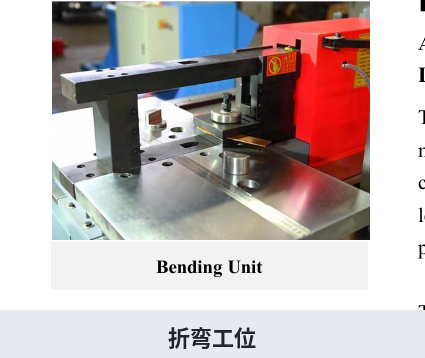
bend station photo
Caption: Bending station photo: worktable and bending die area
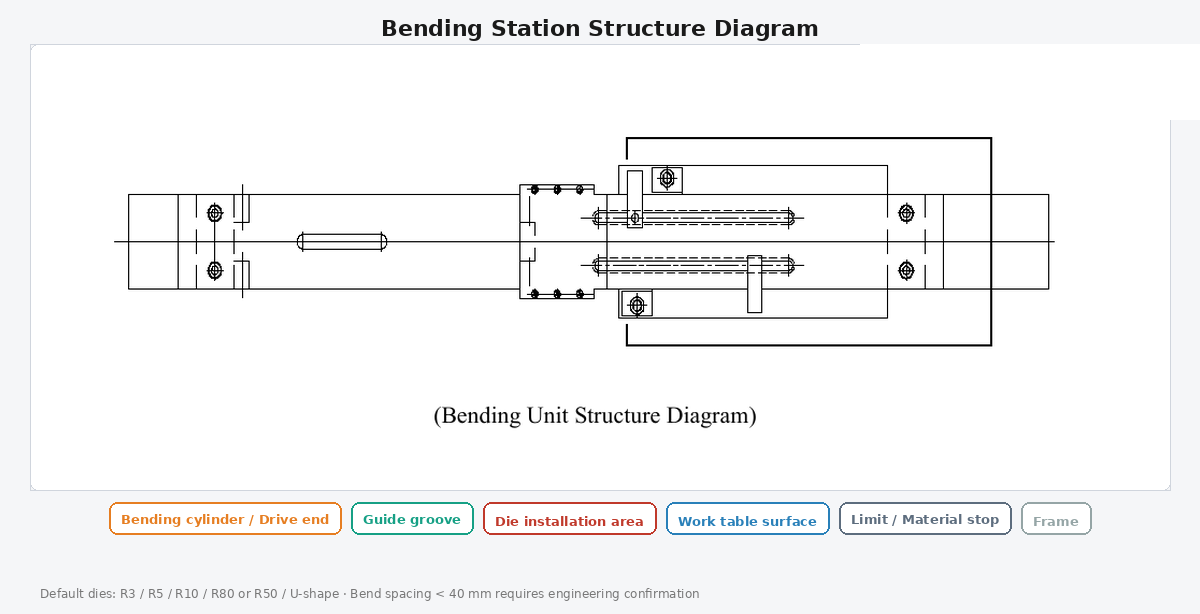
bend structure en
Caption: Bending station structure diagram (cylinder, guide, die mount, table, stops)
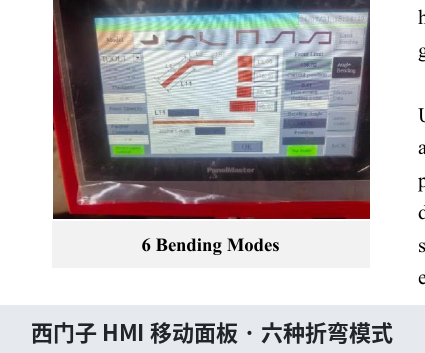
hmi bend modes
Caption: Siemens HMI mobile panel: six bending modes screen
Copper vs aluminum springback: Aluminum often needs larger springback compensation and minimum inside radius. Do not copy copper programs onto aluminum without a trial bend + compensation table.
Conclusion: Quality = aligned dies + tonnage margin + the hole family you actually need.
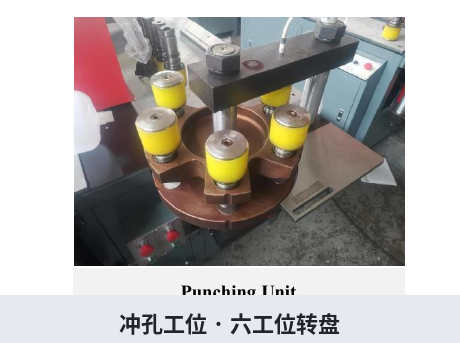
punch station photo
Caption: Punching station photo: 6-station turret and punch dies
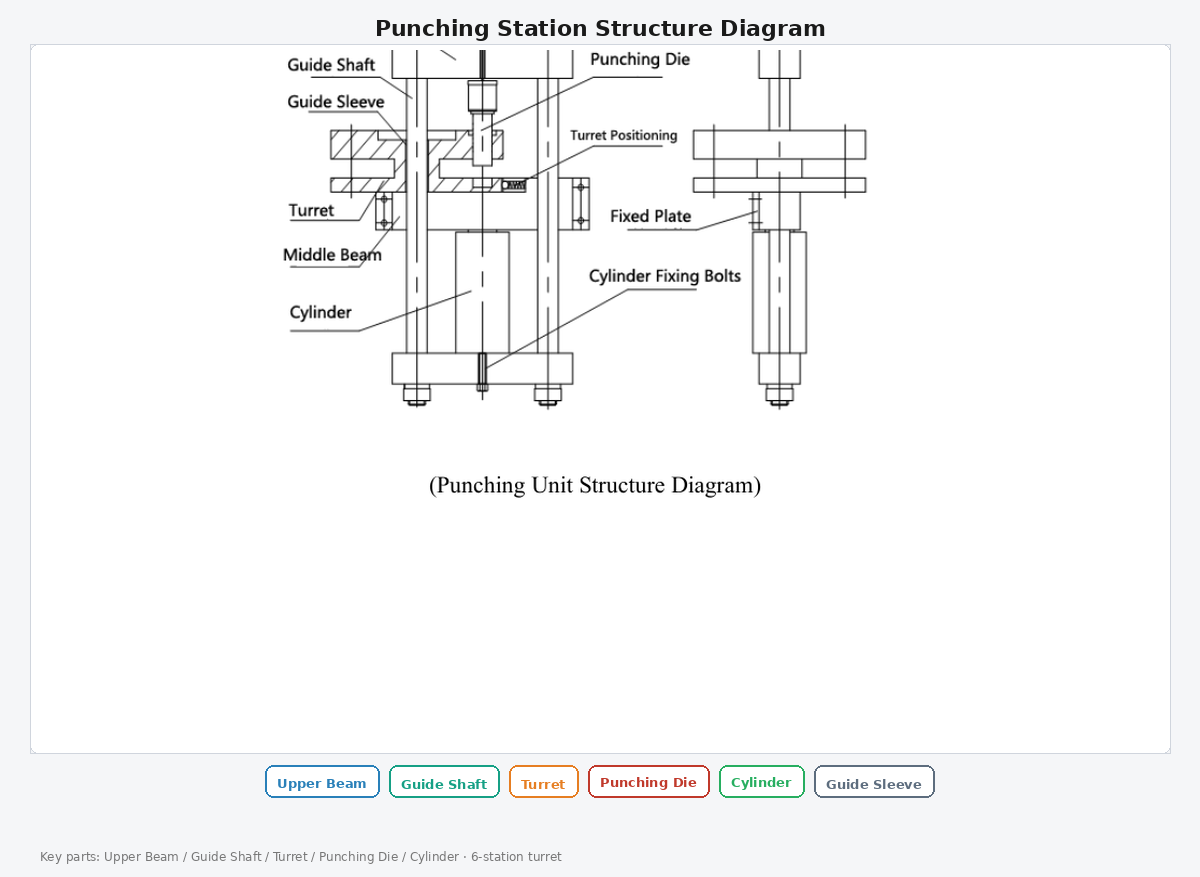
punch structure en
Caption: Punching station structure diagram (upper beam, guide shafts, turret, punch die, cylinder)
Illustrative starter dies (confirm on order): round Ø7/9/11/13/17; oblong Ø11×15, Ø13×18, Ø17×21.
Conclusion: Clean face + controlled tear zone from alloy-steel tooling and stable hydraulics.
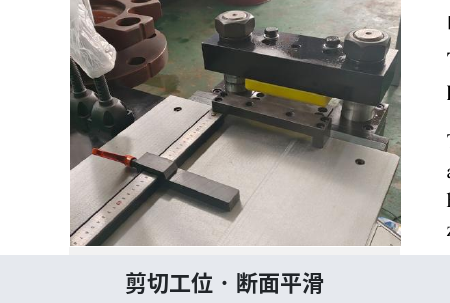
cut station photo
Caption: Cutting (shearing) station photo: dual-pillar shear head and scale
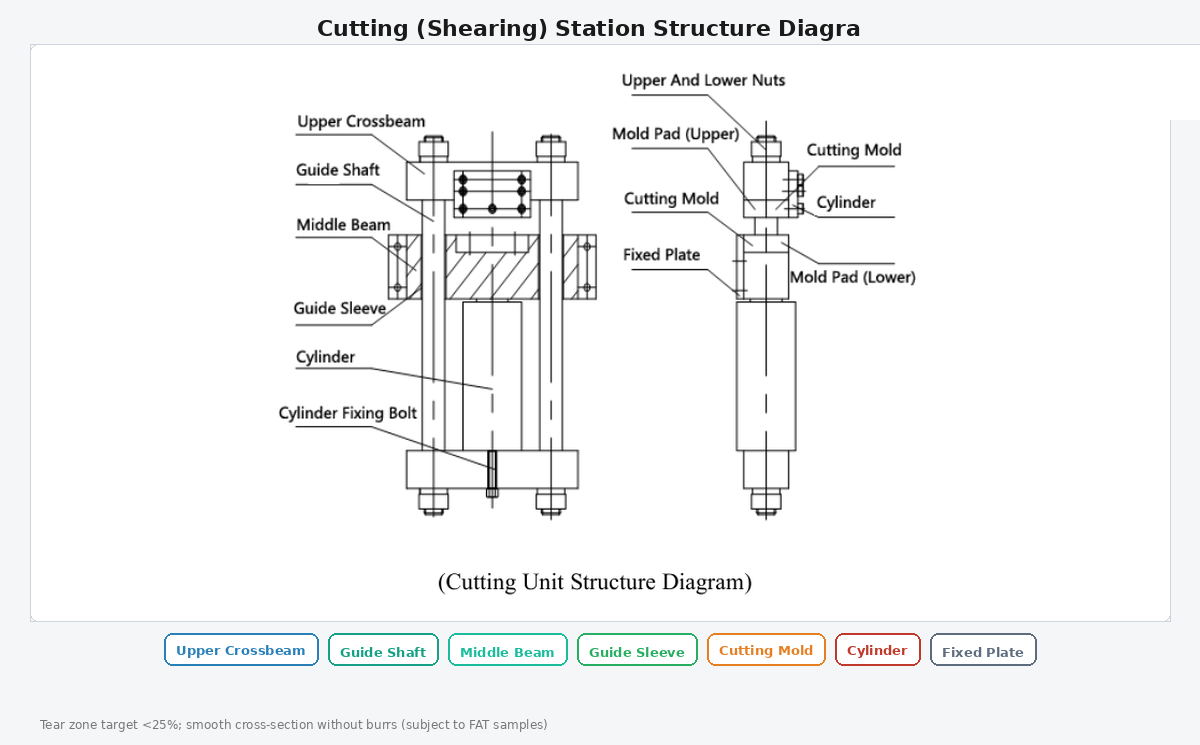
cut structure en
Caption: Cutting (shearing) station structure diagram (upper crossbeam, guides, cutting molds, cylinder)
Three motors/pumps so punch, cut, and bend can run simultaneously or in sequence; throughput still depends on loading and fixtures.
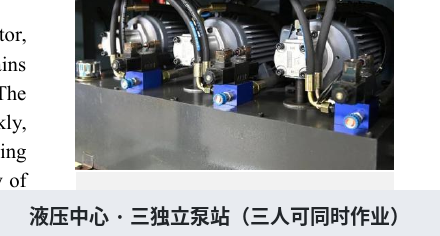
hydraulic center
Caption: Hydraulic center: three independent pump units for three simultaneous operators
plc cabinet
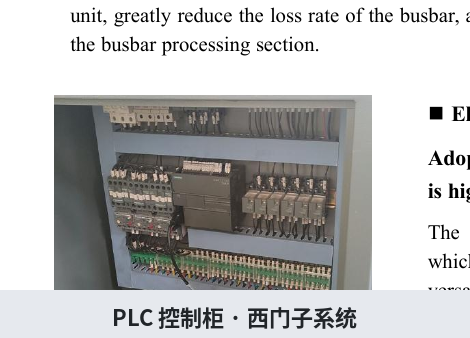
Caption: PLC control cabinet interior (Siemens system)
| Entity | 303U-3-C | 503U-3-C | 803U-3-C |
|---|---|---|---|
| Nominal force (kN) | 300 | 500 | 800 |
| Punching diameter (mm) | Φ4.3–Φ25 | Φ4.3–Φ30 | Φ4.3–Φ34 |
| Max thickness (mm) | 12 | 16 | 20 |
| Max width (mm) | 150 | 200 | 250 |
| Max shear thickness / width (mm) | 12 / 150 | 16 / 200 | 20 / 250 |
| Max horizontal bend width / thickness (mm) | 150 / 12 | 200 / 16 | 250 / 20 |
| Max vertical bend size (mm) | 10×100 | 12×120 | 12×120 |
| Motor power | 3×4 kW | 3×5.5 kW | 3×5.5 kW |
| Bend precision / repeat | ±1° / ±0.5° | ±1° / ±0.5° | ±1° / ±0.5° |
| Approx. mass (kg) | \~1400 | \~1700 | \~2100 |
Quick selection: 303 ≈ 12×150 / Φ25 class · 503 ≈ 16×200 / Φ30 · 803 ≈ 20×250 / Φ34.
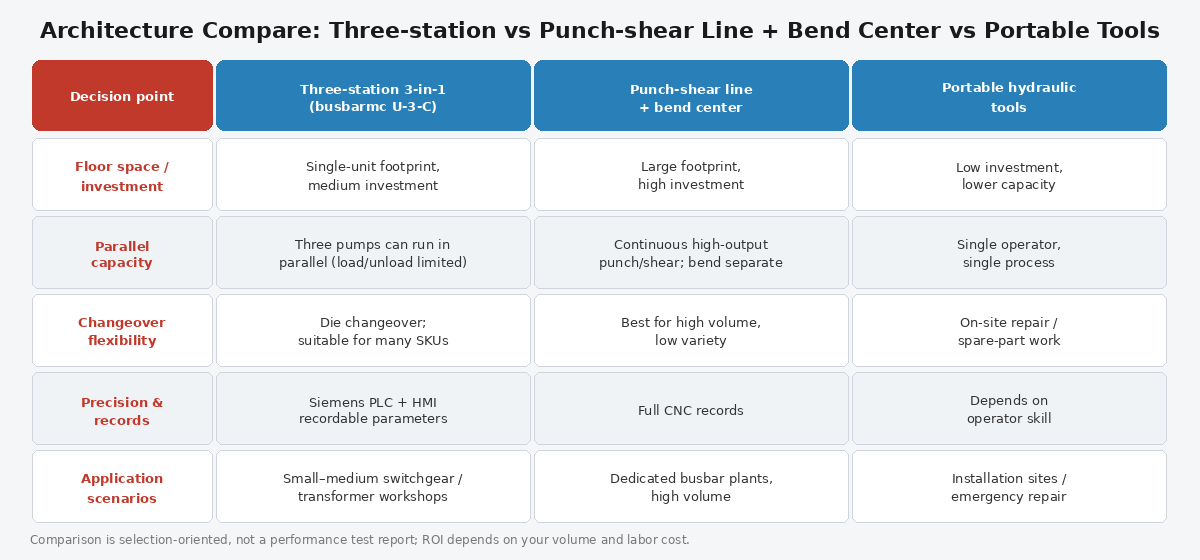
arch compare en
Caption: Architecture compare: three-station 3-in-1 vs punch-shear line + bend center vs portable tools
| Decision factor | Three-station (busbarmc U-3-C) | Punch–shear line + bend center | Portable hydraulic tools |
|---|---|---|---|
| Footprint | One machine | Larger line | Minimal |
| Best for | SME workshops, mixed jobs | High volume / deep automation | Field repair / small mods |
| Parallel work | Possible with 3 pumps | Natural station separation | Usually single task |
| Risk if wrong choice | Capacity ceiling too low | Over-invest for low volume | Poor production repeatability |
process flow en
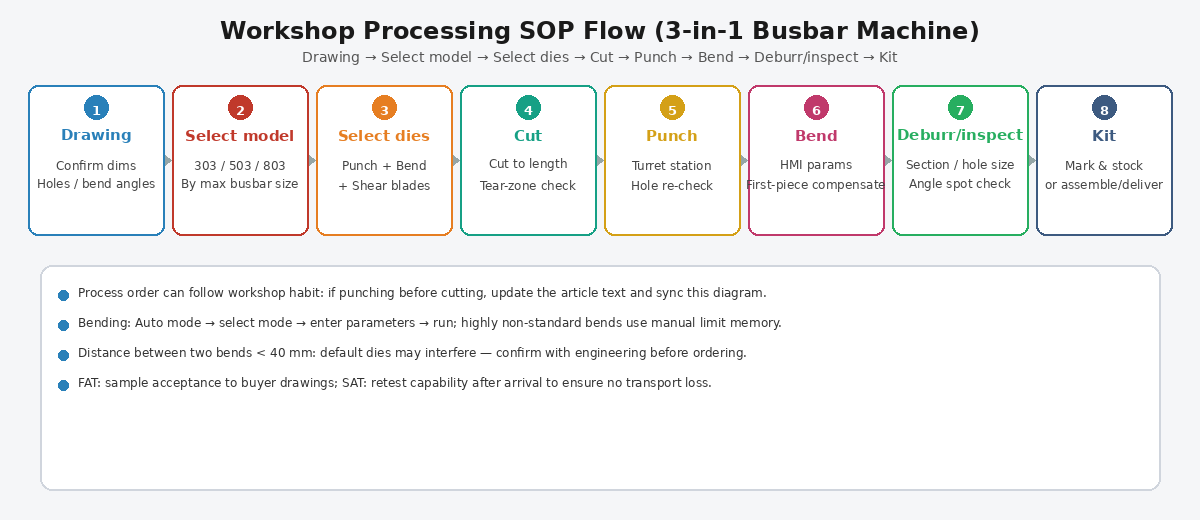
Caption: Workshop SOP: Drawing → Select model → Select dies → Cut → Punch → Bend → Deburr/inspect → Kit
molds set en
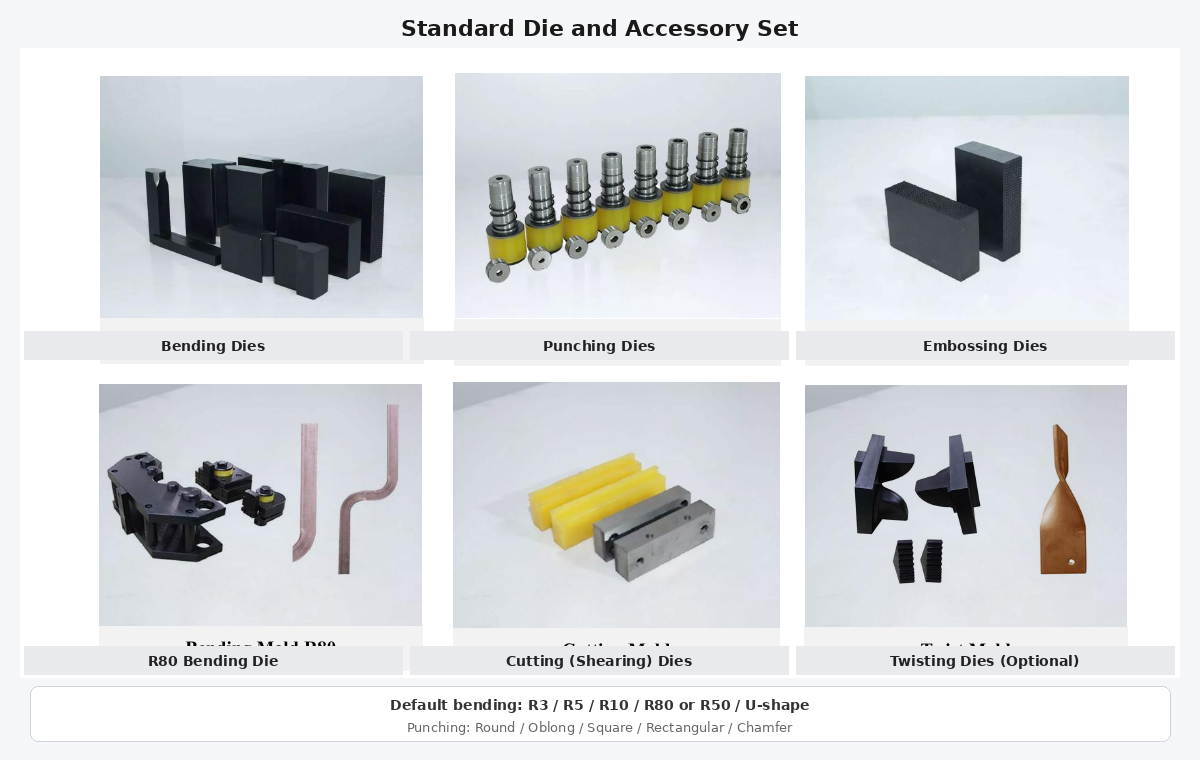
Caption: Standard die and accessory set with English labels (default radii and punch shapes)
FAT: buyer samples for punch/shear/bend; angle after compensation; voltage/HMI; record settings.
SAT: level/hydraulics/safety; repeat critical sample; train auto vs manual bend; spare-parts handover.
Document die life (clearance, lubrication, Al oxide), shear blade life, hydraulic oil/seals, local Siemens-class spares. Budget a spare kit with the machine.
PPE; never exceed published width/thickness; lock out before die changes; keep hands clear of bend dies; separate Cu/Al tooling practices if required.
A three-station (3-in-1) busbar machine combines punching, cutting, and bending for copper/aluminum busbars in switchgear and power distribution.
One footprint for SME workshops vs dedicated line + bend center for high volume and deep nesting.
Yes with three independent hydraulic units; throughput still depends on loading/fixtures.
Map hardest bar/hole/bend to 303U-3-C (12×150), 503U-3-C (16×200), or 803U-3-C (20×250).
About Φ4.3–Φ25 / Φ30 / Φ34 on 303/503/803 — confirm on quotation.
About ±1° / repeat ±0.5° on published tables; verify on FAT.
Yes — keep material-specific springback tables.
Selected round/oblong punches, R3/R5/R10/R80 (or R50), U-shape, embossing, cutting; twist often optional.
Default often 380 V 50 Hz; other industrial voltages if declared at order.
https://www.busbarmc.com/ — plus order acknowledgment for customer-facing claims.